
Yes, marking mistakes do occur. Check your script and ask your centre for a review if you find clear errors. Ofqual sets out when a mark counts as a genuine error, exam boards run this through Service 1, Service 2 and Service 3, and board-aligned mark schemes on MathVault help you self-check before you ask anyone to act. Most students cannot request a review directly: your school or college does this for you, and marks can move up or down once an examiner looks again.
TL;DR:
- A clerical recheck catches missing pages and incorrect totals; seek a full review when creditworthy working was missed or marking rules were misapplied.
- A review can correct marks unsupported by the script, but it cannot replace an examiner’s reasonable judgment about a diagram or explanation.
- Your school or college normally submits the request, while private candidates apply themselves; Service 2 includes a clerical check and can lower marks.
- Record each disputed question, its mark scheme reference, and the uncredited step; give your centre specific evidence rather than a general complaint.
Table of Contents
- Common types of mark scheme mistakes that students actually see
- How marking decisions are made: error versus academic judgement
- Practical checklist: what to look for in your script and mark scheme
- How to request a review in the UK: services, timelines and who applies
- Short examples and board practices that show how mistakes are discovered
- What happens after a review: outcomes and next steps
- A maths educator’s view on handling disputed marks
- How MathVault helps you check your script before you ask for a review
- FAQ
- Sources
Common types of mark scheme mistakes that students actually see
Marking errors fall into a handful of recognisable categories, and knowing which one applies to your script shapes what kind of review you should ask for.
- Administrative errors: a missing page, an unmarked section, or a total that was added up wrongly on the cover sheet.
- Arithmetic and transcription mistakes: component marks that do not sum to the total shown, often a simple addition slip.
- Failure to apply the mark scheme: a step that should have earned a method or accuracy mark was skipped, or the examiner misapplied the A, M, B or follow-through rules.
- Follow-through confusion: marks that should carry through from an earlier error are sometimes withheld when they should stand.
- No response or ambiguous entries: blank-looking answers that actually contain creditworthy working buried in a margin or crossed-out line.
Administrative slips such as missing pages or miscounted totals are usually clerical, and a clerical re-check can check whether pages were marked and totals were added correctly. Genuine mark scheme misapplication, where creditworthy working was never credited, needs a fuller review. Examiner guidance on papers such as the OCR Discrete Mathematics mark scheme explains how method and accuracy marks are applied, which is worth comparing against your own script before deciding which route to take.
Pro Tip: Before you ask for anything, write down the exact question number and the mark you believe was missed. Vague complaints slow a review down; specific ones speed it up.
How marking decisions are made: error versus academic judgement
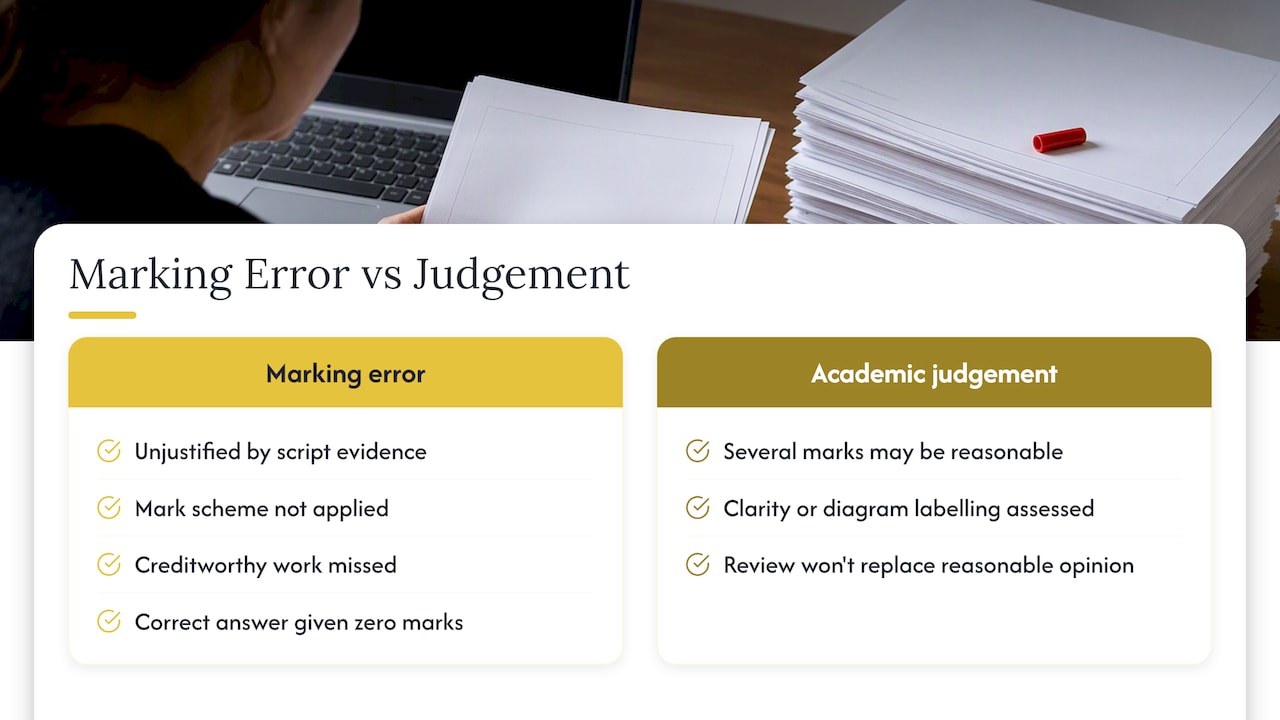
Not every disputed mark is a mistake. Ofqual’s guidance defines a marking error as a mark that could not reasonably have been awarded given the evidence on the script. That includes a clear failure to apply the mark scheme or genuinely missed creditworthy material.
Where an examiner has to exercise judgement, such as deciding whether an explanation is sufficiently clear or a diagram sufficiently labelled, a range of reasonable marks can exist. A review corrects an error or an unreasonable exercise of judgement; it does not simply swap one reasonable opinion for another. In practice, this means a script where a correct final answer was given zero marks is far more likely to be corrected than a script where the examiner judged an explanation “not quite clear enough” and you disagree with that call. Understanding this distinction before you ask your exams officer to act saves time and manages expectations about what a review can realistically change.
Practical checklist: what to look for in your script and mark scheme
Working through your script methodically, rather than skimming for the total, is what turns a hunch into a case your exams officer can act on.
- Look for examiner annotations next to each answer, since these usually explain why a mark was or was not awarded.
- Check that every page carries a tick, a cross or another mark; an entirely blank page is a sign of a missed page worth a clerical re-check.
- Compare your working against the published mark scheme’s method and accuracy marks to see whether a creditworthy step went unmarked.
- Check the mark scheme’s instructions for the question, since they affect what counts as acceptable working and how follow-through marks are allowed.
- Note the exact question number, the mark scheme reference, and a short description of the unmarked step for every issue you find.
Resources such as our method marks guide walk through how method and accuracy marks are meant to apply in practice, which makes it easier to see whether your script was marked consistently with the scheme.
Pro Tip: Photograph or scan each page of your script as soon as you collect it, before annotations fade or pages go missing in transit back to the board.
How to request a review in the UK: services, timelines and who applies
Most students cannot approach an exam board directly. Your school or college submits the request on your behalf; only private candidates apply themselves. There are three distinct services, and choosing the right one matters.
- Service 1 is a clerical re-check: it confirms every page was marked and the totals add up correctly.
- Service 2 is a full review of marking by an independent examiner, and it automatically includes a Service 1 clerical check as well.
- Service 3 reviews moderation decisions and applies on a sampled basis for centres rather than individual scripts.
Deadlines vary by board and by service, and standard review deadlines are typically in late September or October. Check the official review guide for details. Centres may face fees for some services, and there is no guarantee of protection against a lower mark: a Service 2 review can move marks down as well as up. Boards now make marked scripts available to centres before the deadline, which gives schools more to work with when deciding whether a review is worth requesting.
Short examples and board practices that show how mistakes are discovered
Post-results reporting gives a useful window into how corrections actually happen. AQA’s post-results process gives examples of question-level mark changes when a marking error is identified.
- A 3-mark change at question level has, in reported cases, produced a full grade change once corrected.
- When a reviewer changes a mark, they must leave a comment categorising the type of marking error found, not just adjust the number.
- A frequent pattern is unmarked creditworthy working, where a correct method is shown but never credited and the error is found and corrected at review stage.
These examples show reviews are documented, not informal second guesses, and that the paper trail exists precisely so centres can see why a mark changed.
What happens after a review: outcomes and next steps
Your mark may go up, go down, or stay the same after a review. Boards correct clear marking errors and update the candidate’s marks accordingly, which can shift the final grade. Reviewers record their reasoning as part of this process.
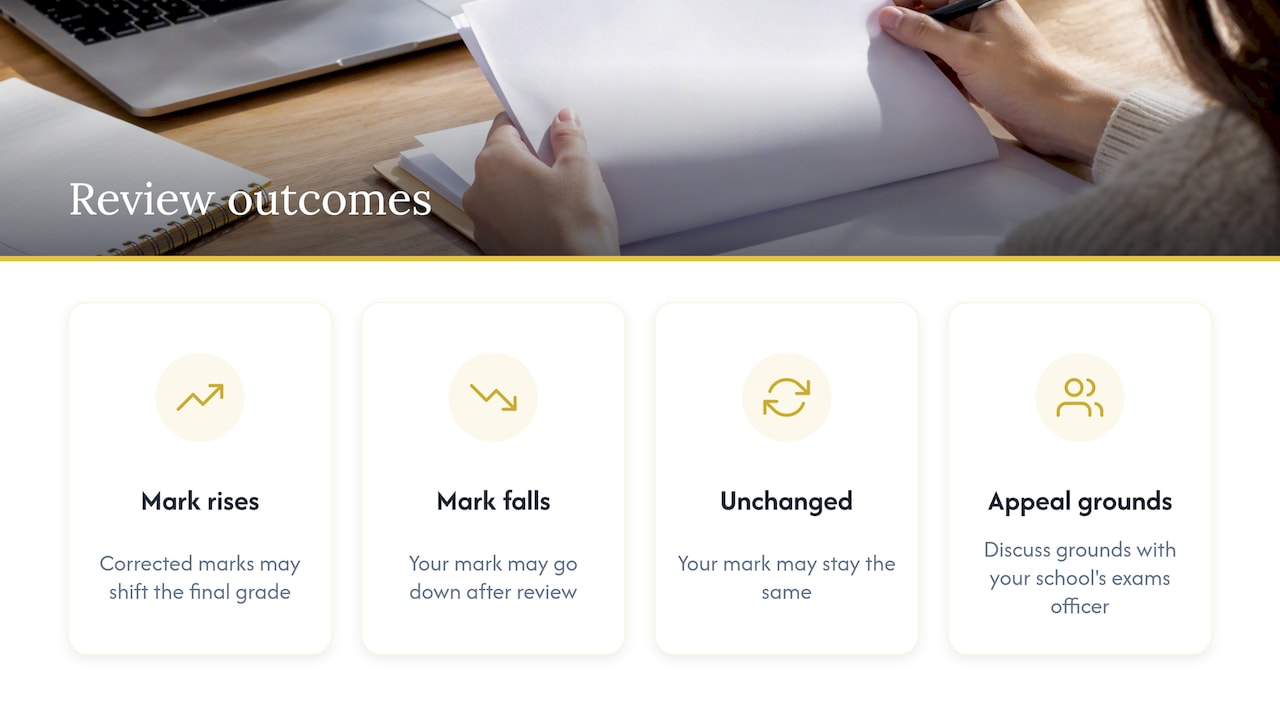
If no marking error is found, Ofqual’s framework limits further appeal to procedural grounds or genuinely unreasonable exercises of judgement, not simple disagreement with a reasonable mark. If you still have concerns after a review, the next step is a conversation with your school’s exams officer about whether grounds for an appeal exist, rather than requesting a repeat review on the same evidence.
A maths educator’s view on handling disputed marks
We find the students who get the best outcomes are the calm, methodical ones: photograph the script, list exact question numbers, and ask for a clerical re-check first before anything more involved. Weigh the risk that a mark could fall, and lean on board-aligned worked solutions to build your case properly.
— Oloru
How MathVault helps you check your script before you ask for a review
We give you free access to board-aligned past papers and fully worked solutions, so you can self-mark your own answers against the same standard an examiner would use, before you ever approach your exams officer.
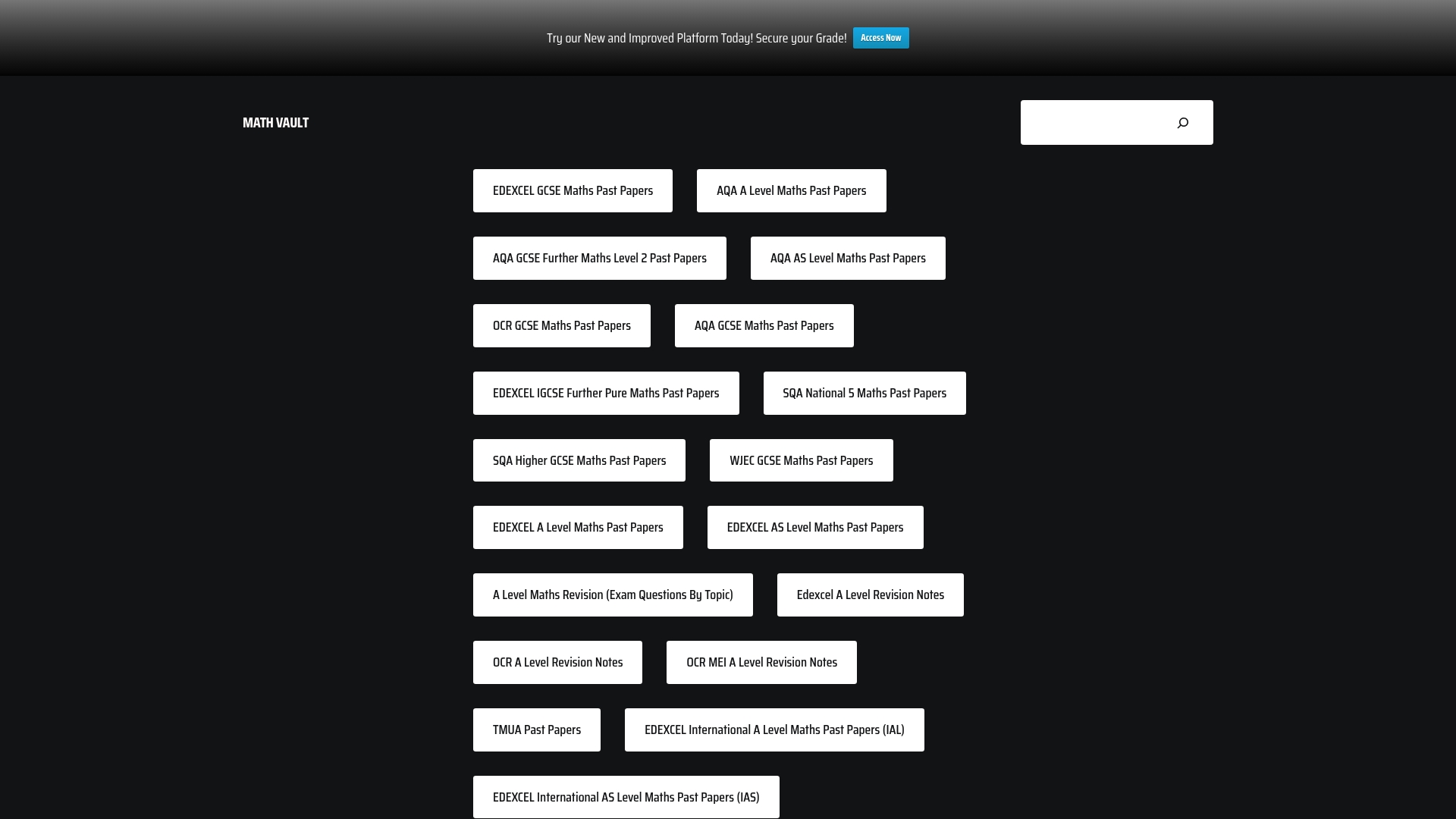
- Compare your working line by line against published mark schemes, including the AQA A-Level 2025 Paper 1 mark scheme, to spot unmarked creditworthy steps.
- Join a live Q&A session to ask directly how a method mark should have been applied to your working.
- Download a complete AQA GCSE Further Maths 2025 Paper 1 mark scheme pack to gather precise, board-matched examples for your exams officer.
If you think your script was marked incorrectly, start by working through our papers and solutions to pin down exactly which question and mark is in dispute, then take that evidence straight to your school.
FAQ
Can students request a marking review themselves?
Generally no, your school or college must request a review on your behalf, except for private candidates, who can apply directly. Fees may apply to the centre, and if an error is confirmed, your mark can be adjusted up or down.
What is the difference between Service 1 and Service 2?
Service 1 is a clerical re-check that confirms every page was marked and totals were added correctly. Service 2 is a full review of marking by an independent examiner and automatically includes a Service 1 check as well.
Can a review lower my grade instead of raising it?
Yes, a review of marking can move marks in either direction, and there is no protection against a lower outcome once Service 2 is requested. This is why checking your script carefully for clear errors, rather than requesting a review on a hunch, matters.
What counts as a genuine marking error rather than fair judgement?
A marking error is a mark that could not reasonably have been given based on the evidence on the script, according to Ofqual’s guidance. Where an examiner has exercised reasonable judgement within an acceptable range, disagreement alone does not count as an error.
Leave a Reply