The 2026 A-level Maths exams for AQA and Pearson Edexcel were held on three afternoons: Paper 1 on 3 June, Paper 2 on 11 June and Paper 3 on 18 June 2026, each lasting 2 hours. CCEA candidates in Northern Ireland sat different units on different dates in May and June. This guide sets out every paper, the start times, how the timetable is built, and what to do now if you are working towards the next summer series.
TL;DR
- AQA A-level Mathematics (7357) and Pearson Edexcel A-level Mathematics (9MA0) both sat Papers 1, 2 and 3 on 3, 11 and 18 June 2026, in the afternoon session.
- CCEA A-level Mathematics (2210) used a unit structure, with exams between 14 May and 3 June 2026.
- The whole 2026 summer series ran from 7 May to 23 June, and Further Maths followed the same common timetable slots agreed by the exam boards.
- Always check the board’s own timetable for your specification code, because paper titles and sessions differ between boards.
- If you are aiming for the next series, build your plan backwards from the late May to mid June window, using past papers under timed conditions.
Table of Contents
- A-level Maths dates in 2026 at a glance
- How the 2026 series was structured
- Start times, session windows and what “afternoon” means
- Board by board: what the dates mean for your revision
- Where to find an official timetable that is guaranteed correct
- Planning for the next summer series
- A revision method that fits the three-paper structure
- Perspective: why dates matter less than the weeks before them
- Practise with the real thing
- Common mistakes with exam dates
- FAQ
- Sources
A-level Maths dates in 2026 at a glance
If you want the answer in one place, this table covers the boards with confirmed 2026 dates in our research. The AQA and Edexcel dates match because the boards share common exam slots under the Joint Council for Qualifications (JCQ).
| Board and specification | Paper or unit | Date in 2026 | Session and length |
|---|---|---|---|
| AQA 7357 | Paper 1 | 3 June | Afternoon, 2 hours |
| AQA 7357 | Paper 2 | 11 June | Afternoon, 2 hours |
| AQA 7357 | Paper 3 | 18 June | Afternoon, 2 hours |
| Pearson Edexcel 9MA0 | Paper 1 | 3 June | Afternoon, 2 hours |
| Pearson Edexcel 9MA0 | Paper 2 | 11 June | Afternoon, 2 hours |
| Pearson Edexcel 9MA0 | Paper 3 | 18 June | Afternoon, 2 hours |
| CCEA 2210 | AS Unit 1 | 14 May | See CCEA timetable |
| CCEA 2210 | AS Unit 2 | 22 May | See CCEA timetable |
| CCEA 2210 | A2 Unit 1 (Pure Mathematics) | 27 May | 2 hours 30 minutes |
| CCEA 2210 | A2 Unit 2 (Applied Mathematics) | 3 June | 1 hour 30 minutes |
The AQA dates come from AQA’s May/June 2026 exam timetable, the Edexcel dates from Pearson’s final summer 2026 timetable, and the CCEA dates and durations from CCEA’s final GCE timetable for summer 2026.
OCR also offers A-level Mathematics, in two versions (Mathematics A and Mathematics B, MEI). If you sat or will sit an OCR paper, read the dates for your exact component from OCR’s own timetable rather than assuming they match the table above.
How the 2026 series was structured
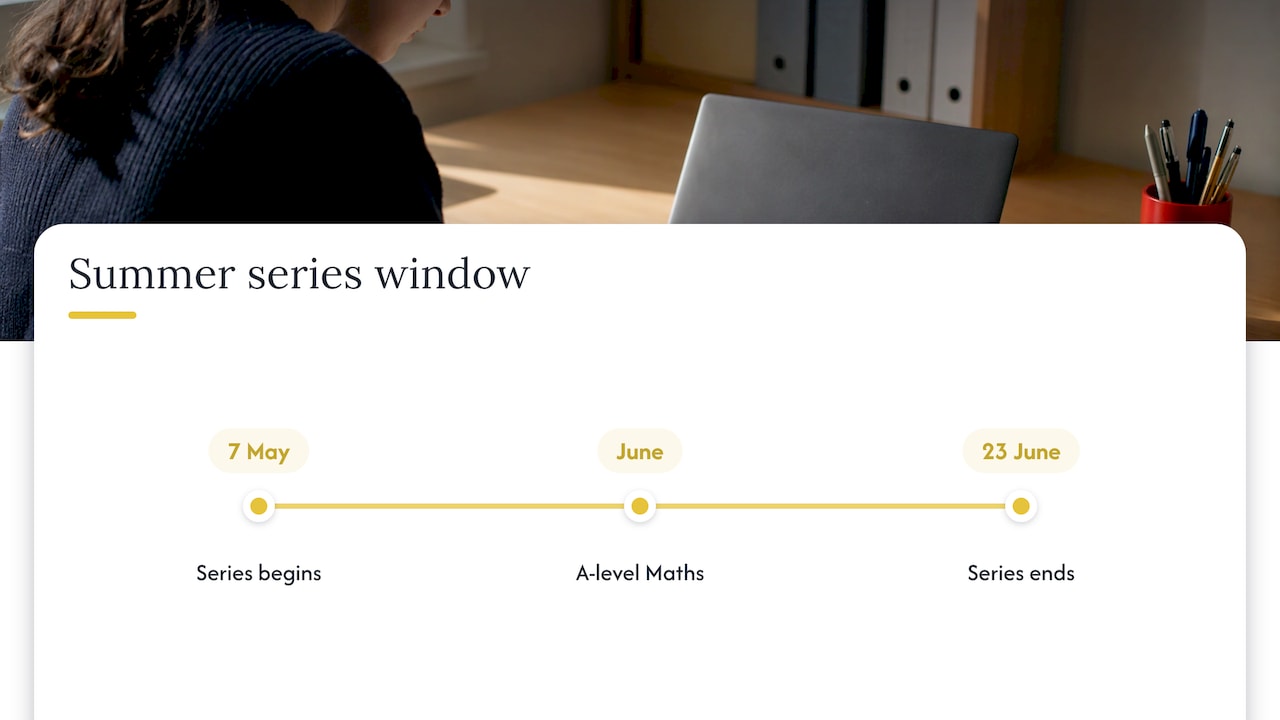
The 2026 summer exam series for general qualifications ran from 7 May to 23 June, not counting the contingency day, according to the Ofqual student guide on GOV.UK. Within that window, A-level Maths fell in June, which is why many students had already finished several other subjects before their first Maths paper.
The reason AQA and Edexcel Maths land on the same days is the common timetable. A-level and AS exams are placed in shared slots agreed by all boards under the JCQ, so that students taking subjects with different boards do not face clashes in most cases. The same applies to Further Mathematics: AS and A-level Further Maths also followed the common slots for the 2026 series, as shown in the AQA timetable linked above.
The practical point is that Maths and Further Maths are scheduled on separate sessions. You should still read your personal timetable carefully, because Further Maths has more papers than Maths, and the optional content you chose decides which papers you actually sit.
Start times, session windows and what “afternoon” means
All three AQA and Edexcel Maths papers in 2026 were afternoon papers. JCQ’s regulations list 9:00am and 1:30pm as the standard session starts, and CCEA’s morning exams start at 9:15am, as set out in the JCQ Instructions for Conducting Examinations. So an afternoon paper normally begins at 1:30pm.
Two details are worth knowing:
- Your school can shift the start slightly. Centres may start or delay an examination by up to 30 minutes either side of the published session time without notifying the awarding body, provided candidates stay inside the session windows. If your school tells you 2:00pm, that is not a mistake.
- CCEA differs from the other boards. Its morning sessions start at 9:15am rather than 9:00am, and its afternoon sessions at 1:30pm.
Whatever your centre says, arrive well before the start. Your exams officer’s instruction overrides what you remember from a general timetable.
Board by board: what the dates mean for your revision
AQA and Edexcel: three papers, three weeks apart
Both boards test Pure Mathematics, Statistics and Mechanics across three papers, each 2 hours. Paper 1 and Paper 2 are each followed by a gap, which is useful. Between 3 June and 11 June there were eight days, and between 11 June and 18 June, seven days. That is enough time to review one paper, fix specific weaknesses and still stay fresh.
A sensible use of the gaps:
- The evening after a paper, write down any questions you felt unsure about. Do not look up answers yet.
- The next day, rest, then revise the topics that the next paper is likely to emphasise.
- In the final three days before each paper, switch to timed practice in the same time slot as the real exam.
There is no point agonising about a paper that has already gone. The remaining papers carry marks too.
CCEA: units rather than papers
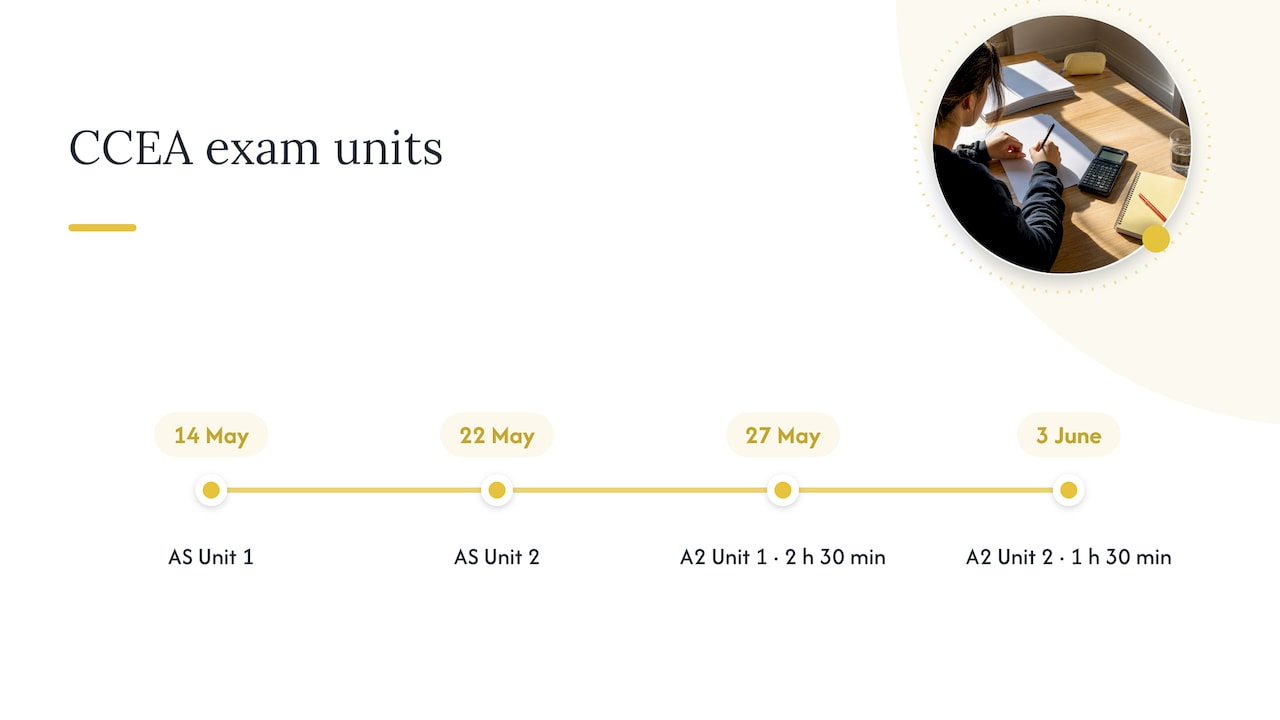
CCEA’s A-level Mathematics is built from units, and in 2026 AS Unit 1 sat on 14 May and AS Unit 2 on 22 May. The A2 units followed on 27 May (Unit 1, Pure Mathematics, 2 hours 30 minutes) and 3 June (Unit 2, Applied Mathematics, 1 hour 30 minutes). These are different lengths from the AQA and Edexcel papers, so your timing practice should match the unit and not a generic two-hour paper.
OCR: confirm the component
OCR’s Mathematics A and Mathematics B (MEI) have their own component structures. Check the component codes printed on your entry confirmation against OCR’s timetable, since the paper names do not match AQA’s “Paper 1, 2, 3” labelling.
Where to find an official timetable that is guaranteed correct
The most reliable pages are the exam boards’ own timetables and the JCQ. JCQ publishes key dates and timetable documents to help centres plan and deliver each series, and the boards publish them in a form you can filter by qualification.
To check for changes to a timetable, use this routine:
- Look at the version number or date on the timetable you are reading, and make sure it is the latest on the board’s site.
- Compare it with the personal statement of entry from your school, which lists your actual papers.
- Ask your exams officer about any difference. They hold the definitive entries.
- Check again a few weeks before the series starts. Boards occasionally update their documents, and the contingency day exists precisely for national disruption.
Third-party timetable sites can be handy for a quick look, but a typo on one is easy to miss. Use them for orientation and the board’s PDF for decisions.
Planning for the next summer series
If you are reading this in the autumn after the 2026 exams, you may be a Year 12 or Year 13 student, a resit candidate, or a parent helping one. The 2026 pattern is a useful guide: the A-level Maths papers sat in June, spaced about a week apart, in the afternoon. Exact dates move every year, so take the current schedule from the board’s official page for your specification. Do not plan around 2026 dates for a later series.
What you can plan around is the shape of the year:
| Period | Focus |
|---|---|
| Autumn term | Finish core content, start topic-by-topic past questions |
| Spring term | Complete the specification, take full timed papers, use mark schemes properly |
| Easter break | Targeted repair of weak topics, one full paper a week |
| May to exam day | Timed papers in the real afternoon slot, light review, sleep |
Work backwards from the first Maths paper. If it falls in late May or early June, you want your last full content review done by Easter, so the final six weeks are about speed and accuracy and not learning new methods.
A revision method that fits the three-paper structure
Because AQA and Edexcel A-level Maths mix pure content across all three papers, you cannot treat Paper 1 as “just pure”. Use this approach.
- Map the topics to marks. Pure content makes up the bulk of the qualification, with statistics and mechanics in the remainder. Your revision time should reflect this.
- Attempt before you look. Do a full question, then check against the mark scheme. Mark it yourself line by line, noting method marks and accuracy marks separately.
- Keep an error log. Write the question, what went wrong and the fix. Review it weekly.
- Time yourself in the exam slot. Sit papers at 1:30pm so your concentration pattern matches the day.
- Use video only after a genuine attempt. Our guide to written versus video solutions explains how to try first, then watch or check.
For a structured timeline, our 4 to 6 week plan using exam-aligned video walkthroughs shows how to arrange the final weeks. If you want guidance on getting the most from worked explanations, read our piece on A-level Maths walkthroughs and how to gain marks.
Perspective: why dates matter less than the weeks before them
We see the same pattern every year. Students search for exam dates in March, feel a jolt of panic and then try to compress months of work into a few weeks. The dates are fixed and public. What you control is how many full, timed papers you complete before them.
Our approach at MathVault is to give students the practice material and the explanations in one place, free of charge: past papers by exam board, fully worked solutions, video walkthroughs and live weekly Q&A sessions. The worked solutions matter most. Seeing exactly where method marks and accuracy marks are awarded changes how you write answers, and that is what moves a grade.
We would rather you spend an evening on one paper with a proper mark-scheme review than skim five. Begin early, keep an error log and use the gaps between papers wisely. Calm, steady work always beats a last-minute rush.
Oloru
Practise with the real thing
The best way to prepare for an afternoon paper is to sit authentic papers in conditions that match it. MathVault offers free access to GCSE and A-level maths past papers organised by exam board, together with fully worked solutions, video walkthroughs, revision guides and live weekly Q&A sessions. A small number of recent or advanced resources and full downloadable packs are paid, and donations are welcome, but the revision materials themselves are free.
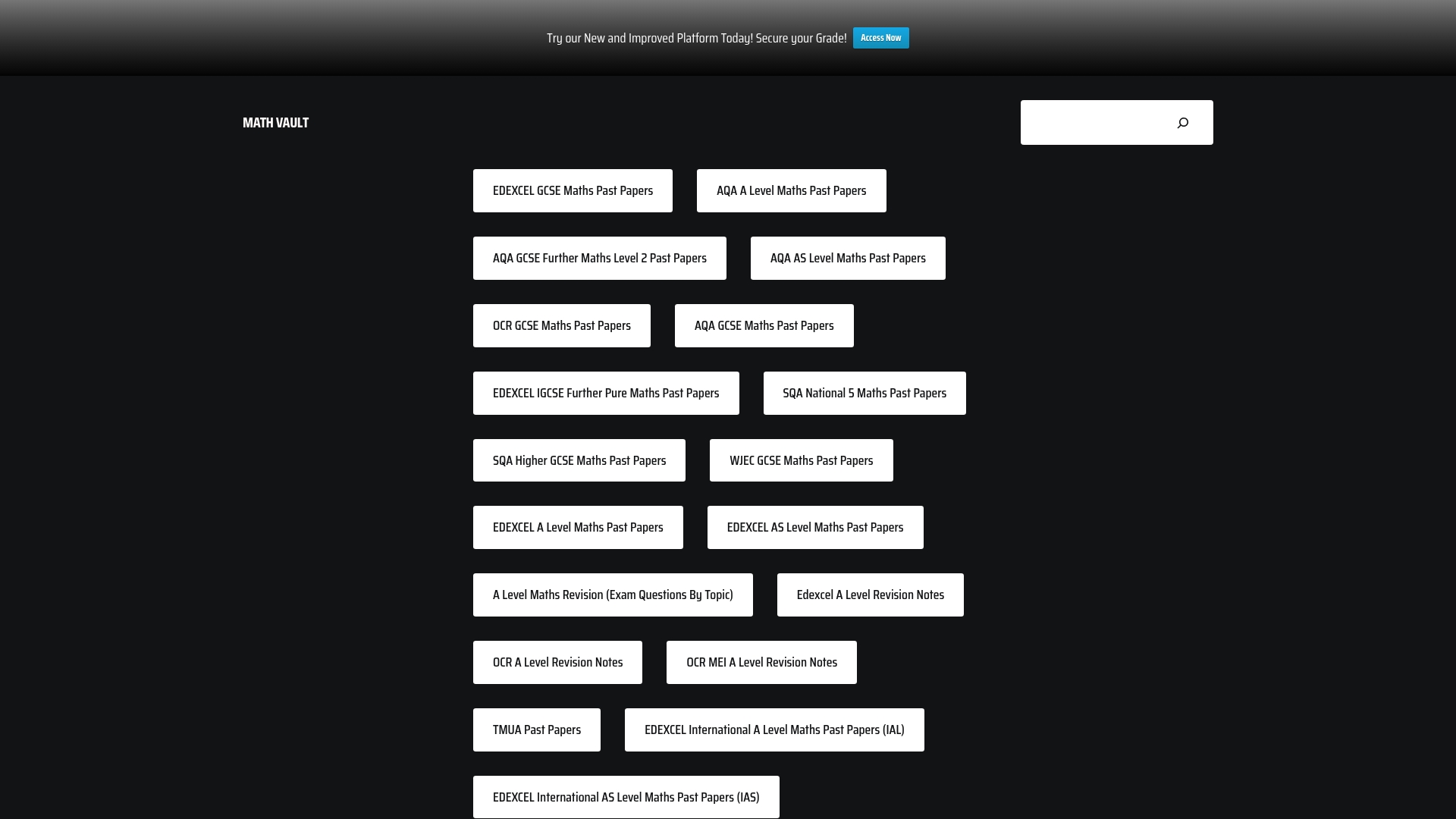
Start with our A-level maths past-paper questions, browse the AQA past papers or see every board in our maths past papers library. Our guide to grade boundaries and exam timetables is a handy companion, and our AQA A-level 2025 papers list shows what is available for that year. If you get stuck, bring the question to our live Q&A.
Common mistakes with exam dates
- Trusting last year’s dates. Boards change dates each series. Use the current timetable for your cohort.
- Mixing up boards. AQA and Edexcel share dates for Maths, but CCEA does not, and OCR has different component names.
- Ignoring the start time. Centres can move a start by up to 30 minutes, so follow the instruction from your school.
- Forgetting Further Maths. If you take both, check the Further Maths papers separately. They sit in their own slots.
- Leaving timed practice too late. Do your first full timed paper well before Easter, not in the final fortnight.
FAQ
When were the A-level Maths exams in 2026?
For AQA and Pearson Edexcel, Paper 1 was on 3 June, Paper 2 on 11 June and Paper 3 on 18 June 2026, all in the afternoon. CCEA’s units ran from 14 May to 3 June. The overall summer series ran from 7 May to 23 June.
How long was each A-level Maths paper?
AQA and Edexcel papers were 2 hours each. CCEA’s A2 Unit 1 (Pure Mathematics) lasted 2 hours 30 minutes and A2 Unit 2 (Applied Mathematics) 1 hour 30 minutes. Always confirm the length of your own paper on your board’s timetable.
Were Maths and Further Maths on the same dates?
No, they were separate papers in separate slots. Both followed the common timetable agreed by the boards through the JCQ. If you take both, your personal timetable from school lists every paper you sit.
What time did the exams start?
JCQ’s standard starts are 9:00am and 1:30pm, and CCEA’s morning exams start at 9:15am. Your school can move a start by up to 30 minutes either way within the session, so follow the time on your own timetable.
How do I check for timetable changes?
Compare the version on your board’s website with the entry confirmation from your exams officer, and ask the officer about any difference. Check again a few weeks before the series begins, since the exams officer holds your definitive entries.
Sources
- AQA A-level exam timetable, May/June 2026
- Pearson Edexcel A-level summer 2026 final examination timetable
- CCEA final GCE timetable, summer 2026
- Ofqual student guide to exams and assessments in 2026, GOV.UK
- JCQ Instructions for Conducting Examinations
- JCQ key dates and timetables
Leave a Reply