
The fastest route to an A level maths A* is board-specific past-paper practice, interleaved across topics, paired with strict exam technique that protects every method mark. Raw-mark ambition matters more than chasing a lenient grade boundary, since thresholds shift each year. Organised past papers and worked solutions can provide a practical way to run that routine every week.
TL;DR:
- Focus on interleaved, topic-rich past-paper practice for better retrieval and exam technique, aiming for weekly timed sessions rather than long marathon revisions.
- Always mark answers immediately with official mark schemes and keep a single error log to identify recurring weak points and patterns over time.
- Prioritize method and showing all working steps, especially during timed practice, to maximize partial credit and improve by-line marking.
- Follow a structured 12-week revision plan, progressively moving from untimed review to full timed past papers, using color-coded trackers to manage topic risk levels.
- Use official grade boundary data, past papers, and worked solutions to calibrate practice scores into likely grades, enhancing focus on raw mark targets over boundary chasing.
Table of Contents
- Practising with past papers and mark schemes for a level maths A*
- Exam technique and timing that protect your method marks
- Building a 12-week A* revision timetable
- Which UK resources actually move your grade
- What the research and top students’ habits actually show
- Consistency over intensity
- Put this plan into action with MathVault
- Sources
- FAQ
Practising with past papers and mark schemes for a level maths A*
Past papers only work if you use them the way examiners intend, not as a casual read-through. Choose recent, board-specific papers first. Full papers suit timed practice; topic-specific question sets suit targeted repair once you have identified a weak area.
A reliable session follows the same shape every time:
- Attempt the questions under timed conditions, phone away, no notes.
- Mark immediately against the official mark scheme, not from memory.
- Log every error in a running list, noting what went wrong and why.
- Rework the same question type within 48 hours to confirm the fix has taken.
Mixing topics inside a single session, rather than drilling one area for an hour, builds the cognitive flexibility exams actually demand. Interleaving pure maths, mechanics, and statistics in one sitting forces you to recognise which technique a question wants, rather than relying on the topic heading to tell you. Research on interleaving from Washington University’s Centre for Teaching & Learning backs this up: mixed practice improves retrieval and technique selection far more than blocked repetition does.
Aim for short, mixed sets daily and one full timed paper a week once you reach the final few months. Consistency beats marathon weekend sessions that leave you exhausted by Sunday evening.
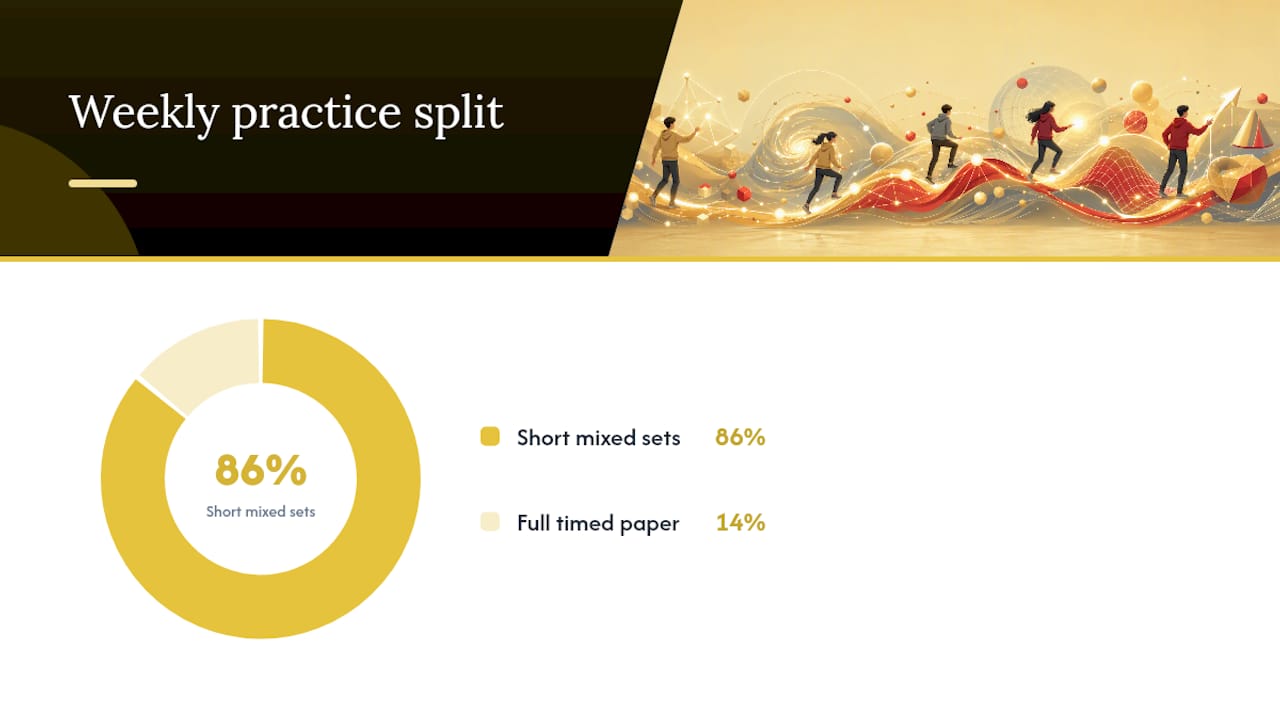
Mark schemes reward method, not just the final number. Read them line by line to see exactly where M marks (method) and A marks (accuracy) fall, then check whether your working would have earned the M mark even when your final answer went wrong.

Pro Tip: Keep a single running document titled “Marks I Lost” rather than separate notes per paper. Reviewing it weekly shows patterns faster than scattered notes ever will.
Exam technique and timing that protect your method marks
Knowing the maths and scoring the marks are two different skills, and exam technique training raises your score without you learning a single new topic, according to analysis from Quextro’s exam technique guide. This is often the exact gap between an A and an A*.
Non-negotiable habits on paper:
- Show every step, including substitutions, so partial credit is available even if the final line is wrong.
- Label diagrams clearly and include units throughout mechanics questions.
- Apply a 60-second entry test on multi-mark parts: if you cannot see the first logical step within a minute, move on and return later if time allows.
- Never leave a question blank when you could sketch a partial method for a mark or two.
Pacing decides whether you finish the paper at all. This approach is set out in Times Edu’s A-level timing strategy, and it works because it catches a stalled pace early rather than at question 15 with ten minutes left.
Statistic Callout: A level maths A* boundaries for AQA and Edexcel typically sit within a high raw-mark percentage range, and that figure moves year to year depending on paper difficulty, according to grade boundary data collated by The Student Room. Chasing raw marks, not a specific boundary, is the safer strategy.
Reserve the final 5 to 10 minutes for verification: check units, rounding, signs, and whether each answer is a reasonable size for the context.
Pro Tip: A six-mark integration question should take around six to nine minutes. If you are still on step one after four minutes, apply the 60-second entry rule retrospectively and move on.
Building a 12-week A* revision timetable
A structured timetable stops revision drifting towards whatever feels comfortable. Twelve weeks gives enough runway to rebuild weak topics, retrieve them under mixed conditions, and simulate full exam pressure before results day.
- Weeks 1 to 4: untimed topic rebuilding, focused on the weakest areas from mocks or teacher feedback.
- Weeks 5 to 8: mixed retrieval practice, short timed sets covering two or three topics per session, moving gradually from untimed to timed.
- Weeks 9 to 11: one full timed past paper each week, plus daily short mixed sets and active error-log review.
- Week 12: light timed practice, focused revision of the error log, and rest before the exam.
A simple traffic-light tracker keeps effort proportional to risk:
- Red: topics that cost you the most marks or appear most frequently. Revisit twice-weekly.
- Amber: topics with occasional slips. Revisit weekly.
- Green: consistently strong topics. Maintain with one mixed set every fortnight.
Use MathVault’s 12-week UK A Level revision timetable for maths as a ready-made structure rather than building one from scratch. If you are also sitting Further Maths modules, slot their overlapping topics into the same mixed sets rather than treating them as a separate revision stream.
Which UK resources actually move your grade
Official mark schemes and grade-boundary documents are not optional extras. They tell you precisely how marks were awarded that year and what the raw-mark cutoff for A* actually was, which varies by board and by year, as Cambridge International’s own threshold tables demonstrate for their own syllabus.
Some platforms fit directly into this workflow:
- Find AQA A Level Maths or Edexcel A Level Maths past papers organised by topic, not just by year.
- Consult worked solutions to check whether your method, not just your answer, would have earned the marks.
- Convert your raw mark to a grade using the A-Level maths grade boundaries tool.
- Join live weekly Q&A sessions when a mark scheme leaves you unsure why a step earned or lost credit.
Examiner reports and formula booklets fill the remaining gaps: reports explain common misconceptions examiners saw that year, and the booklet tells you exactly which formulae you must memorise versus which are provided.
Pro Tip: Print the mark scheme alongside a worked solution rather than choosing one or the other. Worked solutions explain the reasoning; mark schemes tell you the exact wording that earns credit.
What the research and top students’ habits actually show
Interleaving is not a study trend, it is a documented retrieval effect. Practising pure, mechanics, and statistics questions in the same session forces your brain to select the right method rather than pattern match from a single topic block.
Some study structures implement this approach directly:
- Topic papers let you build mixed sets across categories instead of drilling one heading for an hour.
- Worked solutions confirm whether your method would have scored, not just whether your final number matched.
- The grade-boundary conversion tool turns a raw mark into a concrete target, grounded in how boundaries actually moved between 2019 and 2023.
This week: run two mixed timed sets, complete one full past paper, and spend thirty minutes reviewing your error log before starting the next set.
Consistency over intensity
Scoring an A* is a different skill from understanding the content; it is about producing marks under a clock. The habits that compound are small: a short paper daily, honest marking against the real scheme, and a weekly review of what went wrong. Students who keep that rhythm for months outperform those who cram intensively for a fortnight.
— Oloru
Put this plan into action with MathVault
There are free UK-specific materials available that this plan actually needs, without a subscription wall between you and the papers you require. Start with the Edexcel A-Level past paper questions by topic to build your first mixed session, then check your working against the fully worked solutions before moving to the mark scheme yourself.
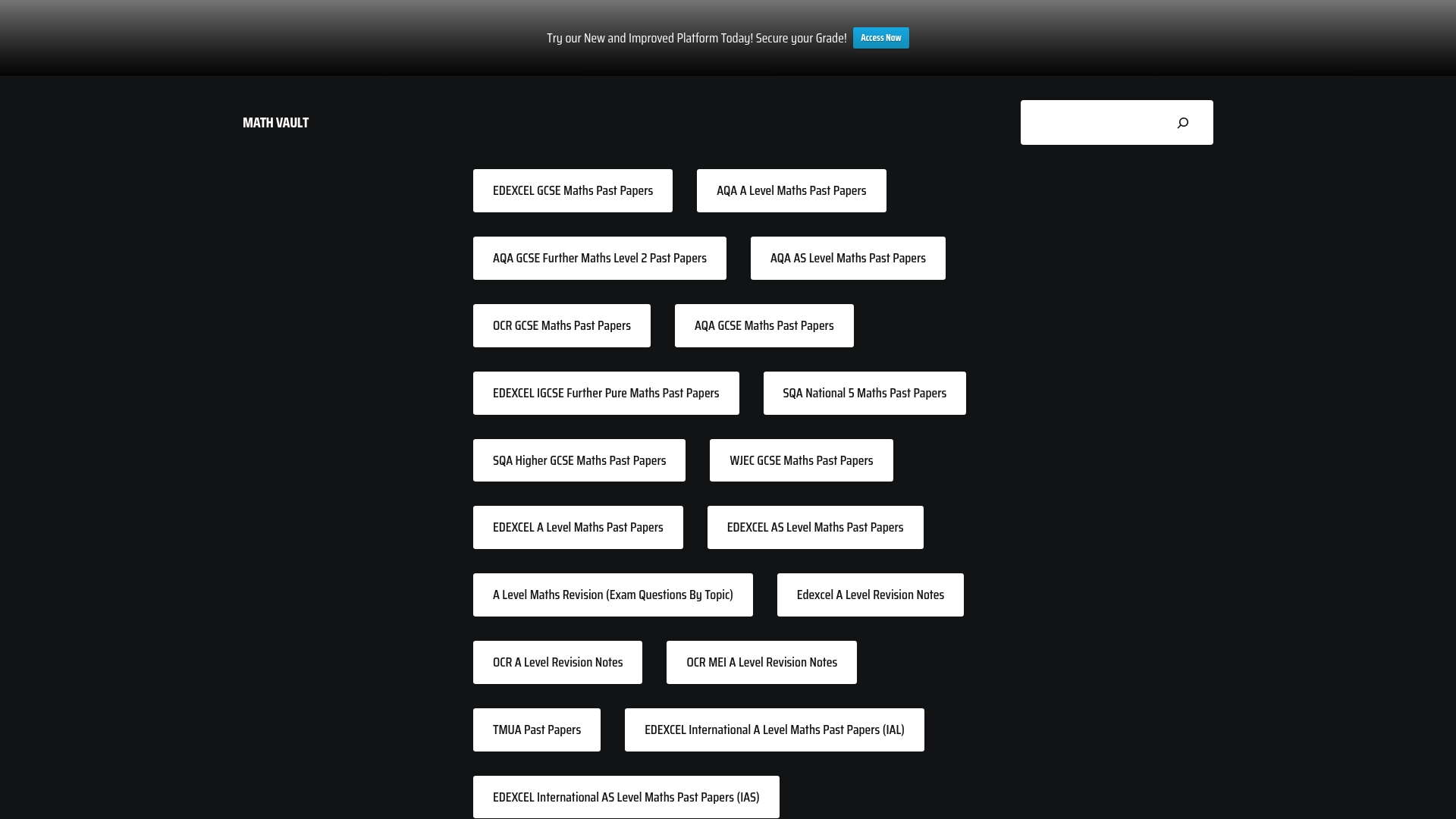
This week, a workable routine looks like this: pick one topic set from the Edexcel collection, complete it timed, mark it against the worked solution, then add anything you missed to your error log. Most papers and worked solutions are free to access directly on the site, while students who want a printable, organised pack for sustained revision can get the downloadable Edexcel past paper compilation for offline practice. If you would rather follow a ready-built schedule than plan your own, the 12-week revision timetable maps directly onto the approach set out above. Open the topic collection today and run your first timed set before the week is out.
Sources
- A level maths grade boundaries — The Student Room
- A level Mathematics 2017 reformed specifications: grade distributions and grade boundaries 2019–2023 — Stephen Glaister (University of Reading)
- Mathematics (9709) grade threshold table — Cambridge International
FAQ
What proportion of students get an A* in maths A-level?
The proportion varies by board and by year, since grade boundaries move with paper difficulty rather than staying fixed. Grade distribution data for 2019 to 2023 shows meaningful swings year on year, which is exactly why aiming for consistently high raw marks matters more than targeting a specific percentage.
How hard is it to get an A* in A-level maths?
It ranks among the more demanding A* outcomes because boundaries sit within a high raw-mark range and questions test both technique and speed under time pressure, per The Student Room’s boundary data. Students who combine board-specific past-paper volume with strict timing and mark-scheme awareness close that gap fastest.
What are UK A-levels equivalent to in the US?
UK A-levels broadly correspond to Advanced Placement (AP) courses or the final year of high school plus some first-year college content in the US system, though the comparison is approximate since grading structures differ. A-levels are typically more specialised, with students studying three or four subjects in depth rather than a broader spread.
What are the hardest A-level subjects?
Maths, Further Maths, and the sciences (particularly Chemistry and Physics) are frequently cited among the toughest A-levels because of their content density and the technical precision required under exam conditions. Maths specifically punishes weak exam technique, since a correct method with an arithmetic slip can still lose marks if working is not shown clearly.
Does MathVault help with grade boundary conversion?
Yes, MathVault’s grade boundary conversion tool lets you translate a raw practice-paper score into the grade it would likely represent for your board and year. It works alongside the fully worked solutions so you can see both your projected grade and exactly where marks were gained or lost.
Leave a Reply