
Yes, video walkthroughs are an effective revision tool for UK exams when paired immediately with active practice such as spaced retrieval and timed mocks. The strongest approach is a simple cycle: watch a worked example, attempt a similar question unaided, then explain your reasoning aloud or in writing. There are platforms offering exam-aligned walkthroughs for GCSE and A level maths that fit neatly into this method.
TL;DR:
- Using exam-specific video walkthroughs aligned to your qualification and syllabus saves time and ensures relevant content coverage.
- Combining spaced repetition, retrieval practice, and explanation exercises significantly enhances long-term retention and understanding.
- Focus on weak topics in targeted re-watches and only move to timed mock tests in the final preparation stage to simulate exam conditions accurately.
- For the Life in the UK test, repeatedly practice with official mock questions to consistently score above 75% before scheduling the exam.
- Always verify that video content matches your exam board, current syllabus edition, and specific topic to avoid studying outdated or irrelevant material.
Table of Contents
- Where to find exam-aligned video walkthroughs in the United Kingdom
- How to use video walkthroughs effectively: spacing, retrieval and worked examples
- A ready 4 to 6 week study plan for using video walkthroughs before UK exams
- How MathVault’s video walkthroughs and live Q&A convert watching into exam marks
- Why walkthroughs have limits and when timed practice matters more
- Try MathVault: where to start and which exam page matches you
- Sources
- FAQ
Where to find exam-aligned video walkthroughs in the United Kingdom
Not every video walkthrough on the internet is written for the exam you are sitting, and using the wrong one wastes revision time you cannot get back. Start with sources built specifically for your qualification rather than generic explainer channels.
For maths and other school qualifications, look for education platforms that organise videos by exam board and specification, teacher-created YouTube playlists tied to a named syllabus, and school or university revision hubs. For the Life in the UK test, the only fully reliable source of questions is the official Life in the UK test handbook, so any video walkthrough should be checked against the current edition before you trust it. For driving theory, some providers carry consumer confidence badges, such as the listing shown on Buy with Confidence, though a badge is not a substitute for confirming the content matches the current test format.
Before you commit time to a video, run through a short checklist:
- Check the edition or publication date against the current syllabus or handbook version.
- Confirm the exam board is named explicitly, not implied or omitted.
- Match the video to a specific chapter, topic or learning objective, not a vague overview.
- Look for a presenter or channel with a stated qualification or teaching background.
When searching YouTube or a platform’s library, add UK-specific terms to your query: the exam board name, “GCSE” or “A level” rather than generic year labels, and the qualification’s official title. A video that uses unfamiliar terminology, references a different curriculum’s grading system, or shows exam papers with a layout you do not recognise is very likely made for a different market and should be skipped, however well produced it looks.
How to use video walkthroughs effectively: spacing, retrieval and worked examples
Watching a video is comprehension, not learning. The distinction matters because comprehension fades quickly unless it is tested and revisited, which is exactly what spacing and retrieval practice are designed to do.
Spacing practice, which means distributing study across days or weeks and gradually widening the gap between reviews, substantially improves long-term retention compared with cramming, according to Birmingham City University’s revision guidance. Retrieval practice, or forcing yourself to recall an answer before checking it, works alongside spacing. A research synthesis on spacing and retrieval practice supports combining both with worked examples as an effective way to build durable understanding, particularly for multi-step problem solving.
That is the logic behind the watch, attempt, explain routine:
- Watch one worked example in full, without pausing, so you see the entire method before judging any single step.
- Immediately attempt a similar question from a different source, without looking back at the video.
- Compare your working against the model answer and mark where your method diverged.
- Explain the correct method aloud, or in writing, as if teaching someone who has never seen the topic.
- Revisit the same topic again after two or three days, then again after a week, tightening the gap only if you got it wrong.
Each stage takes fifteen to twenty minutes, so a single topic cycle fits inside a lunch break or a short evening session. The explaining step is easy to skip and the one that matters most, because it forces you to reconstruct the method from memory rather than recognise it on screen.
Video walkthroughs earn their place over a textbook page when a problem involves several linked steps, when exam technique such as showing working for method marks is the point, or when a command word like “justify” or “explain” needs a spoken model of what a full answer sounds like. For a single formula or definition, a textbook or revision note is usually faster.
Pro Tip: Pause the video the moment you can predict the next step, write your prediction down, then unpause to check it: this turns passive viewing into a running retrieval test.
The most common way students waste video revision time is by watching passively, nodding along without pausing, and mistaking recognition for recall. A close second is ignoring syllabus mapping altogether, working through a video that covers a topic your exam board does not examine in that form. A third, common with the Life in the UK test and with driving theory, is using content built for a different country’s syllabus or an older edition of the handbook, which can teach facts that no longer match the current test.
A ready 4 to 6 week study plan for using video walkthroughs before UK exams
A study plan works best when video walkthroughs sit inside a structure rather than filling every session on their own. The template below assumes a test date roughly five weeks out and adjusts easily to four or six.
In week one, read through the full syllabus or handbook once, without trying to memorise it, and use walkthrough videos only for topics you find confusing on first pass. Weeks two and three move chapter by chapter, pairing one walkthrough with one attempt-and-explain cycle per topic, and logging every topic where you score below your target. Week four returns to those weak topics exclusively, re-watching only the specific section of a walkthrough that covers the sticking point rather than the whole video again. The final week, whether it is week five or six, is almost entirely timed mock tests, with videos used only to diagnose why a specific question went wrong.
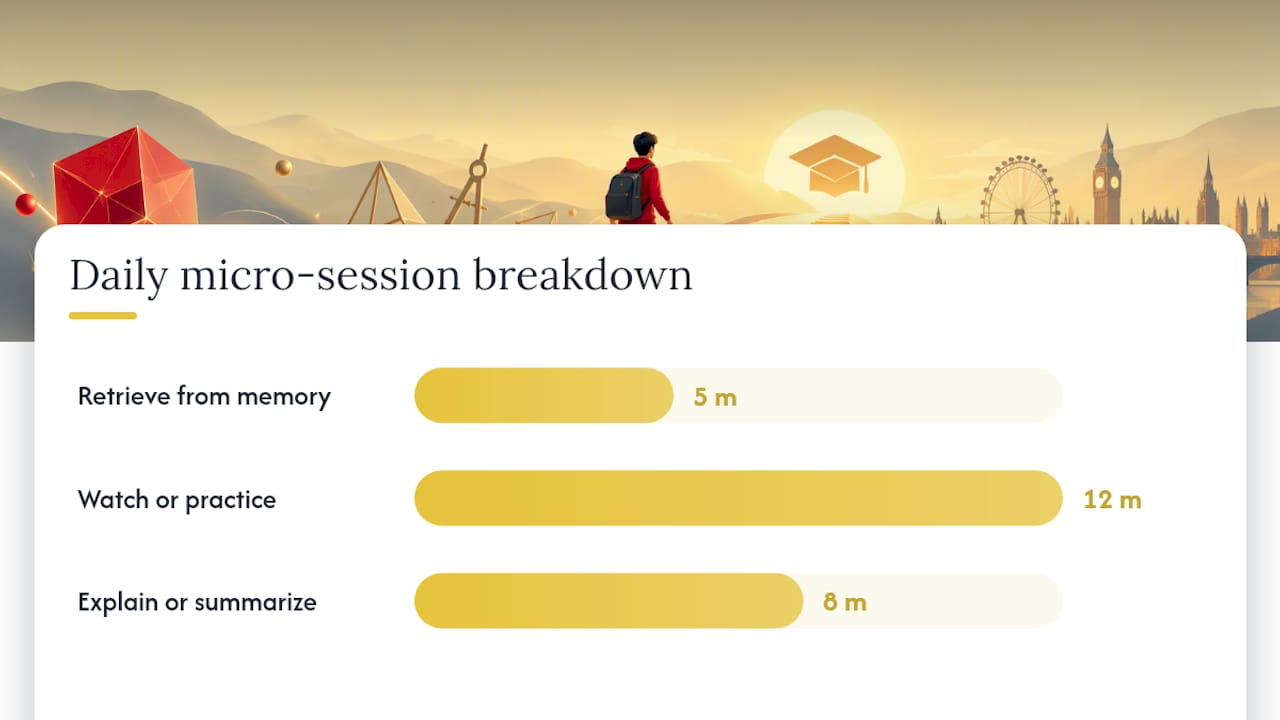
A daily micro-session of twenty to thirty minutes works well on top of this structure:
- Five minutes: retrieve yesterday’s topic from memory before checking notes.
- Ten to fifteen minutes: watch one walkthrough or attempt one practice set, depending on the week.
- Five to ten minutes: explain the method aloud or write a short summary from memory.
For the Life in the UK test, which is 24 multiple-choice questions in 45 minutes with a pass mark of 75%. One sensible benchmark is to sit timed mocks until you consistently score comfortably above that mark before booking. For driving theory, the equivalent benchmark is consistent mock scores well clear of the pass threshold across several sittings, not a single lucky run.
| Week | Focus | Video use |
|---|---|---|
| 1 | Full syllabus or handbook read-through | Walkthroughs for confusing topics only |
| 2 to 3 | Chapter-by-chapter coverage | One walkthrough per topic, paired with a practice attempt |
| 4 | Weak-point remediation | Re-watch only the specific weak section |
| 5 (or 6) | Timed mocks and final polish | Diagnostic use only, on wrong answers |
Once your mock scores are consistent, book the test. For the Life in the UK test, you must book at least three days in advance through the official GOV.UK portal, and you must bring the exact physical identification document used at the time of booking. Turning up with a different, even valid, form of ID can mean refusal on the day and losing the fee entirely. If a resit is needed, the same booking and identification rules apply again, so treat your first attempt’s paperwork as the template for any second one.
How MathVault’s video walkthroughs and live Q&A convert watching into exam marks
Some platforms build video walkthroughs around the watch, attempt, explain cycle rather than treating videos as a standalone product. Such resources are designed to be used alongside another, so videos do not sit in isolation from practice.
- Board-aligned video walkthroughs that follow the exact mark scheme language used by AQA, Edexcel and other UK boards.
- Fully worked, step-by-step solutions to past exam questions, allowing comparison of attempt method by method.
- Live weekly Q&A sessions where specific weak topics can be raised and worked through in real time.
- Downloadable revision packs organised by exam board and topic, for offline practice between sessions.
A practical example: a student struggling with binomial expansion at A level watches the relevant walkthrough on a Monday, attempts three past-paper questions on the same topic that evening, marks them against the worked solution, and brings the one question they still cannot resolve to that week’s live Q&A session. By the following Monday, a follow-up attempt on a fresh question set shows whether the gap has actually closed, rather than just feeling closed.
The same structure applies to proof questions, where the walkthrough’s value lies less in the final answer and more in watching how a tutor frames the argument in response to the command word, something a written solution alone can struggle to convey.
Why walkthroughs have limits and when timed practice matters more
Video walkthroughs teach reasoning well. They show you how a method is built, why a step follows from the one before it, and how to phrase an answer to a command word like “justify” or “evaluate”. That is genuinely difficult to get from a written solution alone.
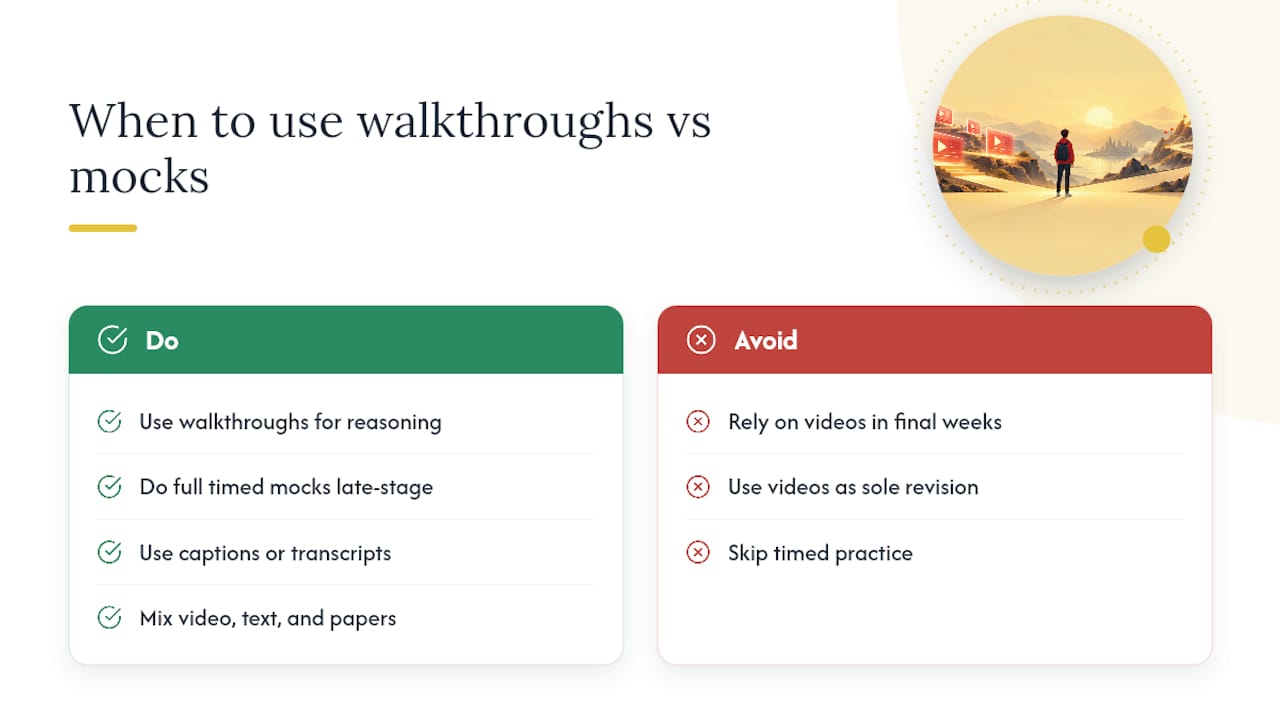
They are less useful in the final week or two before a test. At that stage, the job shifts from learning a method to proving you can execute it under time pressure without prompts, and only a full timed mock does that honestly. Treat late-stage videos as a diagnostic tool for a specific wrong answer, not a revision activity in their own right.
One practical note: use captions or transcripts where they are available, both for accessibility and because reading the exact phrasing of a step alongside hearing it tends to make command-word language stick. No single format, video, text or practice paper, covers every gap on its own, and the strongest revision plans mix all three deliberately rather than defaulting to whichever feels easiest to consume.
— Oloru
Try MathVault: where to start and which exam page matches you
Every walkthrough on MathVault.io is free to watch, paired with a fully worked solution you can mark your own attempt against, and backed by a live Q&A slot if a topic still will not click. There is no signup wall between you and the first video.
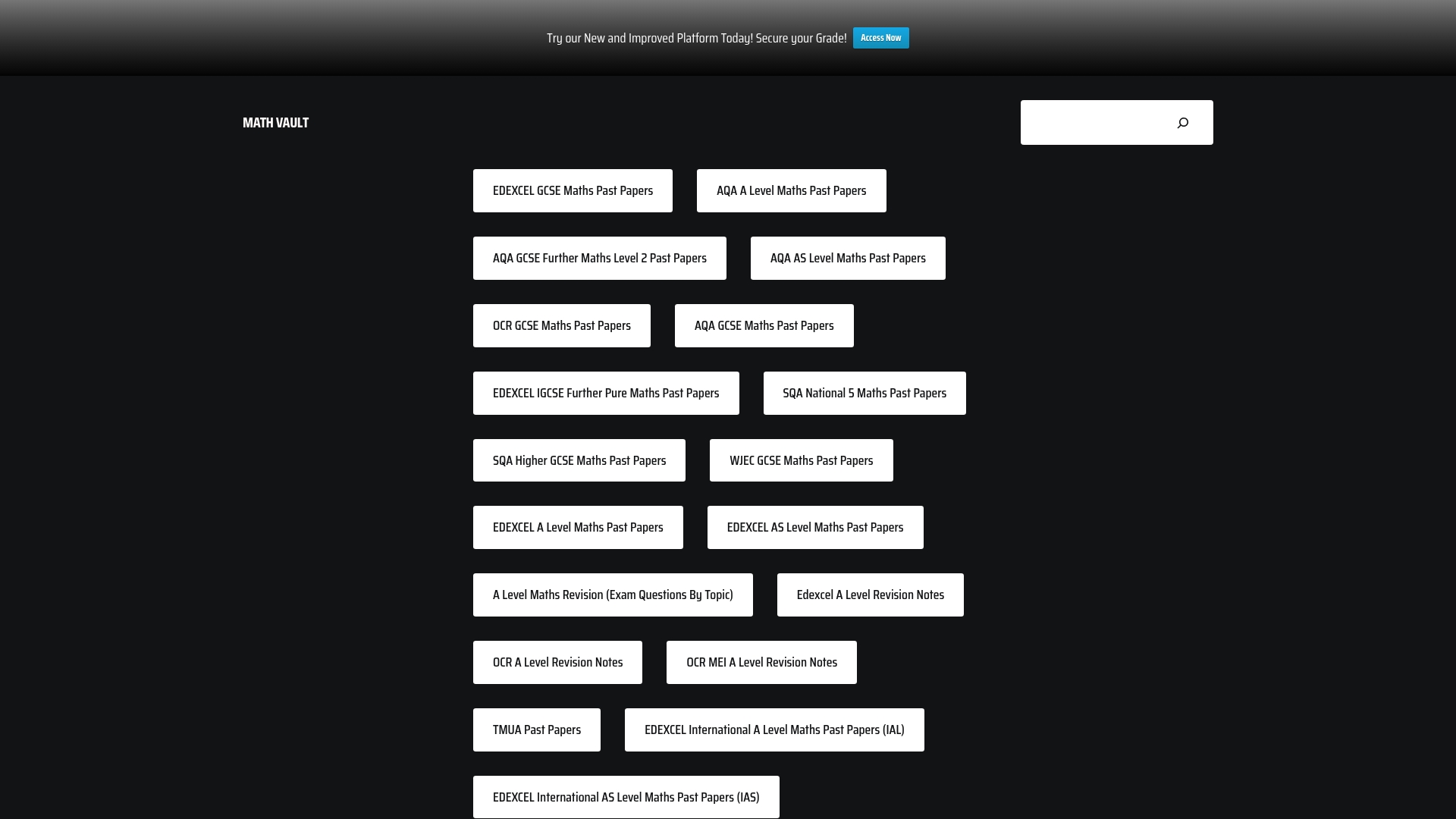
- GCSE students should start with the self-mark past papers with board-aligned solutions and live Q&A.
- Edexcel GCSE candidates working topic by topic can use the Edexcel GCSE maths past paper questions by topic.
- A level students preparing across the full specification can work through the Edexcel A level past paper exam questions by topic.
Pick the page that matches your board and year, watch the first walkthrough, and book a slot at the next live Q&A if a topic still needs talking through.
Sources
For the Life in the UK test itself, the official GOV.UK test page and its identification requirements are the primary references. For the revision method behind this article, see Birmingham City University’s guidance on spaced repetition.
- Gov
- Best ways to revise — spaced repetition (Birmingham City University)
- The science of effective learning with a focus on spacing and retrieval practice — ResearchGate
FAQ
What is the easiest way to pass the Life in the UK test?
The most reliable approach is repeated, timed practice from the official handbook combined with active recall rather than passive reading. Sit mock tests until you consistently score comfortably above the 75% pass mark before booking the real thing.
How many mistakes are allowed to pass the Life in the UK test?
The Life in the UK test has 24 questions and a pass mark of 75%, meaning at least 18 correct answers are needed within the 45-minute time limit. Getting more than six questions wrong means a fail.
What topics come up in the Life in the UK test practice questions?
Questions are drawn entirely from the official “Life in the United Kingdom: A Guide for New Residents” handbook, currently in its 3rd edition, covering British history, traditions, government and everyday life. Any practice source should state which edition it maps to, since older editions can include outdated facts.
How can I prepare effectively for the Life in the UK test?
Read the official handbook fully once, then revise using spaced, timed practice questions mapped to the current edition rather than relying on memory alone. Book your test at least three days in advance and bring the exact identification document used at booking to avoid refusal on the day.
Leave a Reply