
Start with topic practice to fix gaps and build fluent methods, then switch to mixed practice to train your ability to spot which method a question needs. Pick one weak topic this week, work through it, then follow with a short mixed set that blends it with two others. Topic packs and mixed past-paper sets are built for exactly this switch.
TL;DR:
- Mixing questions from multiple topics enhances the ability to select the correct method under exam conditions, with benefits increasing over time and after a month.
- Switching from topic practice to mixed practice should occur once you can solve questions with few errors and can explain methods confidently, typically within four to six weeks of exams.
- Structured mixed practice, including linking different topics and timed questions, better prepares students for AO3-style exam marks than unorganized question sets.
- Limiting mixed sessions to three to five topics prevents overwhelm and supports effective retrieval and strategy development.
- Resources organized by exam board facilitate easy transition from focused topic packs to comprehensive past-paper sets, supporting staged revision.
Table of Contents
- What topic practice and mixed practice actually look like
- What the evidence says about mixed practice and exam results
- When to switch from topic practice to mixed practice
- How to build a mixed practice session, step by step
- Weekly timetables that combine both methods
- Common mistakes with mixed practice and how to fix them
- How an online maths resource supports the shift from topic to mixed practice
- Where to find the right resources on MathVault
- Sources
- FAQ
What topic practice and mixed practice actually look like
Topic practice, also called blocked practice, means working through a run of questions on a single subject, say twenty questions on quadratic equations, one after another. You stay in the same mental groove the whole session, applying the same method repeatedly until it becomes automatic.
Mixed practice, often called interleaved practice, shuffles questions from several topics into one session. Twenty questions might cover quadratics, trigonometry, probability and sequences, arranged so you never know what’s coming next.
The two feel very different while you’re doing them:
- Topic practice feels smooth and confidence-building because you’re repeating a method you’ve just seen.
- Mixed practice feels slower and more uncertain because you have to work out which method applies before you can start.
- That discomfort is often mistaken for a sign that mixed practice isn’t working, when in fact it’s a sign that real learning is taking place.
Students frequently judge their revision by how easy it feels in the moment. Blocked practice feels easier because the method is fresh in your head. Mixed practice forces you to retrieve and select, which is a harder and more useful skill.
What the evidence says about mixed practice and exam results
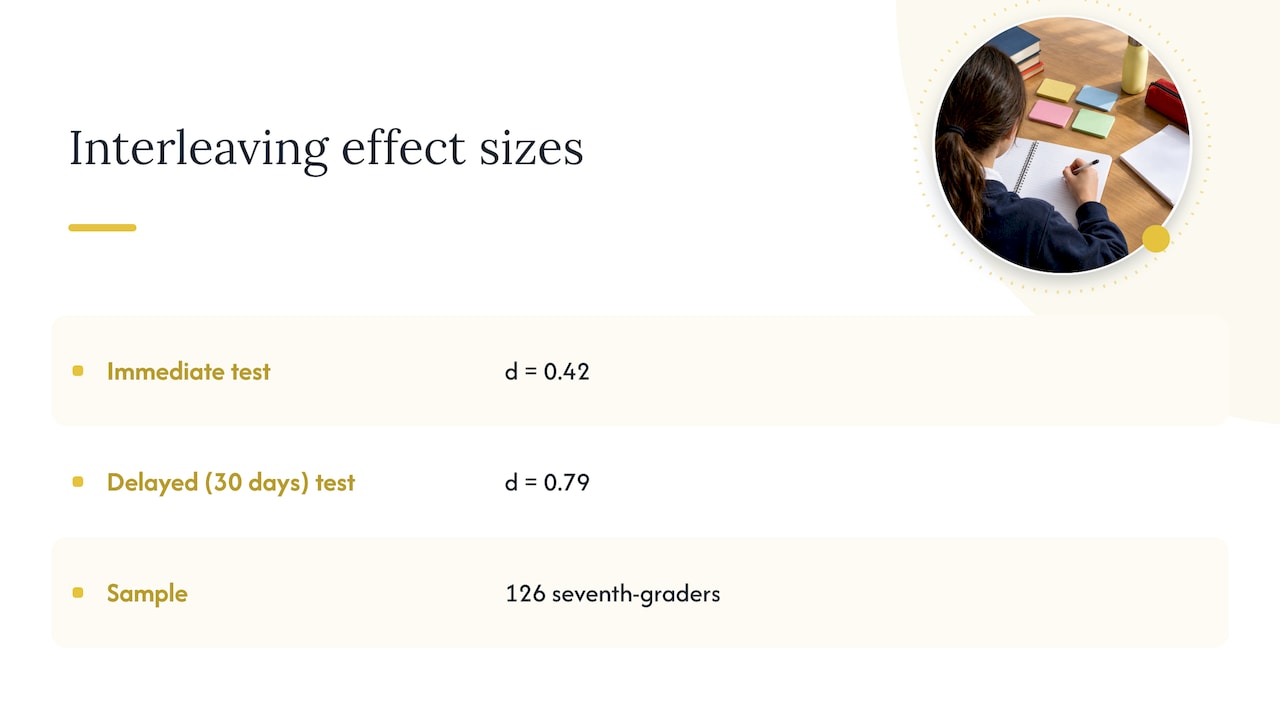
A controlled classroom study with 126 seventh-grade students gave half their practice problems in blocked order and half in interleaved order, then tested them immediately and again 30 days later. The interleaved practice research found a Cohen’s d of 0.42 on the immediate test and 0.79 on the test a month later, meaning the advantage of mixing grew stronger over time rather than fading.
Interleaved practice nearly doubled its effect size from immediate to delayed testing (d = 0.42 to d = 0.79) in a study of 126 seventh-graders, according to research summarised by ERIC That gap matters for GCSE and A-Level students, who sit exams months after they first learn a topic, not the day after.
Separate research on shuffled mathematics practice problems found that mixing often slows performance during practice itself but improves later test scores, largely because learners have to choose the correct procedure rather than simply execute one they’ve already been told to use. That skill, choosing the right method under uncertainty, is precisely what AO3 problem-solving questions test, and it’s also distinct from the spacing effect: even when spacing is held constant, interleaving still improves strategy selection on its own.
When to switch from topic practice to mixed practice
Topic practice earns its place first. It diagnoses misconceptions, isolates errors, and builds the fluent AO1 method skills you need before you can afford to focus on selection.
Three signals tell you it’s time to switch:
- You can complete a set of topic questions with few basic errors and without checking notes.
- You can explain the method out loud, step by step, without hesitating.
- You’re within roughly four to six weeks of your exam, regardless of confidence, because selection skills need runway to develop.
Run a short timed mini-test on a topic before deciding. If your error pattern is mostly careless slips rather than misunderstanding, you’re ready to move on. If the same type of mistake keeps appearing, stay in topic practice a little longer and revisit the specific misconception before switching. The GCSE mathematics assessment objectives require students to make connections between different parts of the syllabus, and that connective skill only develops once individual methods are secure.
How to build a mixed practice session, step by step
Designing a good mixed session takes a few minutes of planning before you start.
- Choose three to five topics, ideally one you’ve just finished with topic practice and two or three you covered earlier in the term.
- Pick six to ten questions total, pulling from past papers or topic packs rather than writing your own.
- Include at least one AO3-style question that requires linking two topics together, and one or two higher-mark questions that stretch beyond routine recall.
- Set a timer based on the marks available, roughly 1.2 minutes per mark, to mirror real exam pressure.
- Mark your own work against official worked solutions, noting not just right or wrong but which method you chose and why.
- Log any error in a short running list so patterns become visible over several sessions.
Pro Tip: Include at least one problem that forces you to link two different topics in every mixed session: it’s the closest rehearsal you can get for AO3 marks on the real paper.
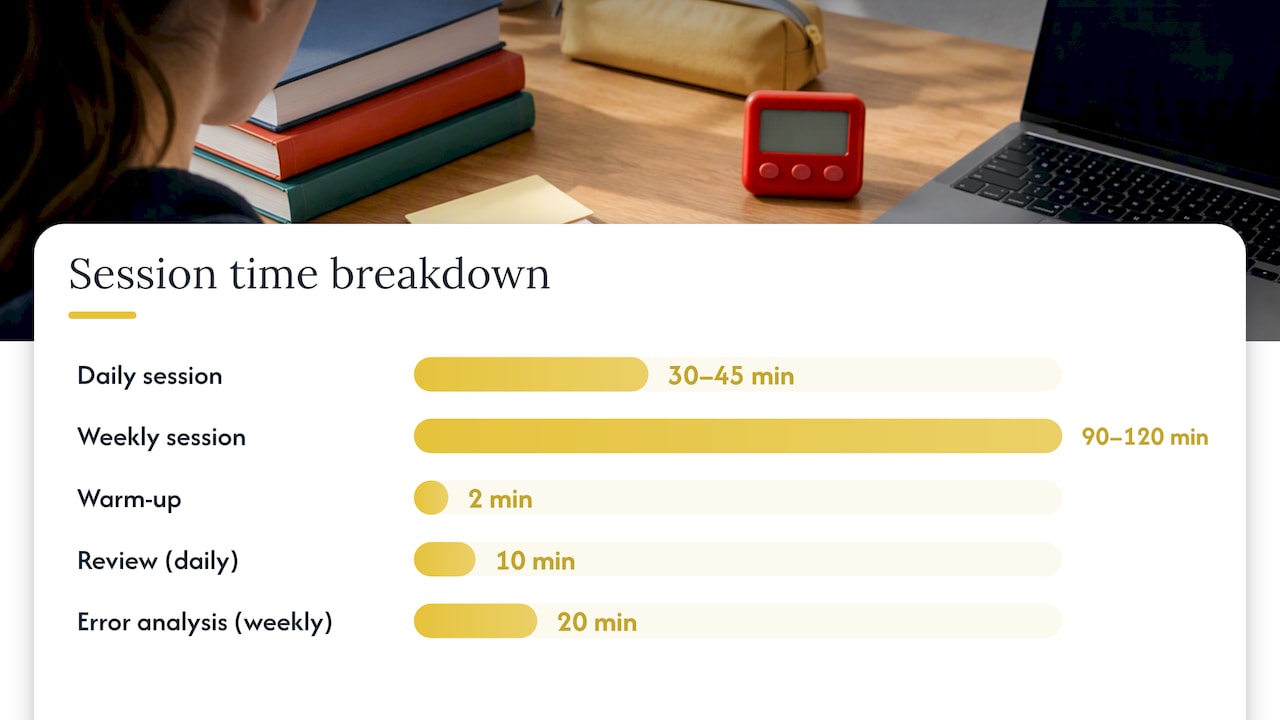
Two templates cover most revision needs. A daily short session, 30 to 45 minutes, starts with a two-minute warm-up on a topic you’re confident with, moves into 20 mixed questions across four or five areas, and finishes with 10 minutes reviewing worked solutions against your own answers. A weekly long session, 90 to 120 minutes, opens with a timed mixed section from a real past paper, follows with 20 minutes of error analysis, and closes with a short blocked drill targeting whichever topic produced the most mistakes.
Weekly timetables that combine both methods
How you balance the two methods should shift as your exam date gets closer.
- Early revision phase (12 to 8 weeks out): four sessions of topic practice using subject packs, plus two short mixed sessions of 30 minutes each to keep selection skills warm.
- Exam season (6 weeks out and closer): four or five mixed sessions built from timed past-paper sections, with one short blocked drill reserved for whichever topic is still producing errors.
- Slot a full past paper in every week or two once you’re in exam season, using it as your longest mixed session rather than a separate task.
- Use topic packs for the early phase and move to full past-paper sets as sessions get more mixed, so the materials themselves track your staging.
The 12 week A-Level revision timetable gives a ready structure you can adapt to your own exam board and start date.
Common mistakes with mixed practice and how to fix them
Mixed practice only works when it’s done with some structure behind it.
- Mixing randomly with no review afterwards wastes the exercise: fix this by building in a fixed review slot after every session and keeping an error log you revisit weekly.
- Cramming too many topics into one session overwhelms rather than stretches you: limit each mixed set to three to five topics so you can still make productive progress rather than just guessing.
- Skipping the worked solutions means you never learn why a method was the right choice: always self-mark against full worked answers, not just final answers.
Pro Tip: If you finish a mixed session and can’t explain why you chose a particular method for even one question, go back to the worked solution before moving on.
How an online maths resource supports the shift from topic to mixed practice
The resource is built around the staging that the evidence points to. Content is organised by topic for focused early revision, and by full past-paper sets for the mixed practice that should follow it.
Fully worked solutions turn every mistake into something you can learn from rather than a mark you simply lost, and live Q&A sessions support misunderstandings that keep resurfacing after trying a worked solution. A typical workflow: start with a topic pack to secure the method, move to a mixed past-paper section once routine questions are right, then bring anything still unclear to a live session.
— Oloru
Where to find the right resources on MathVault
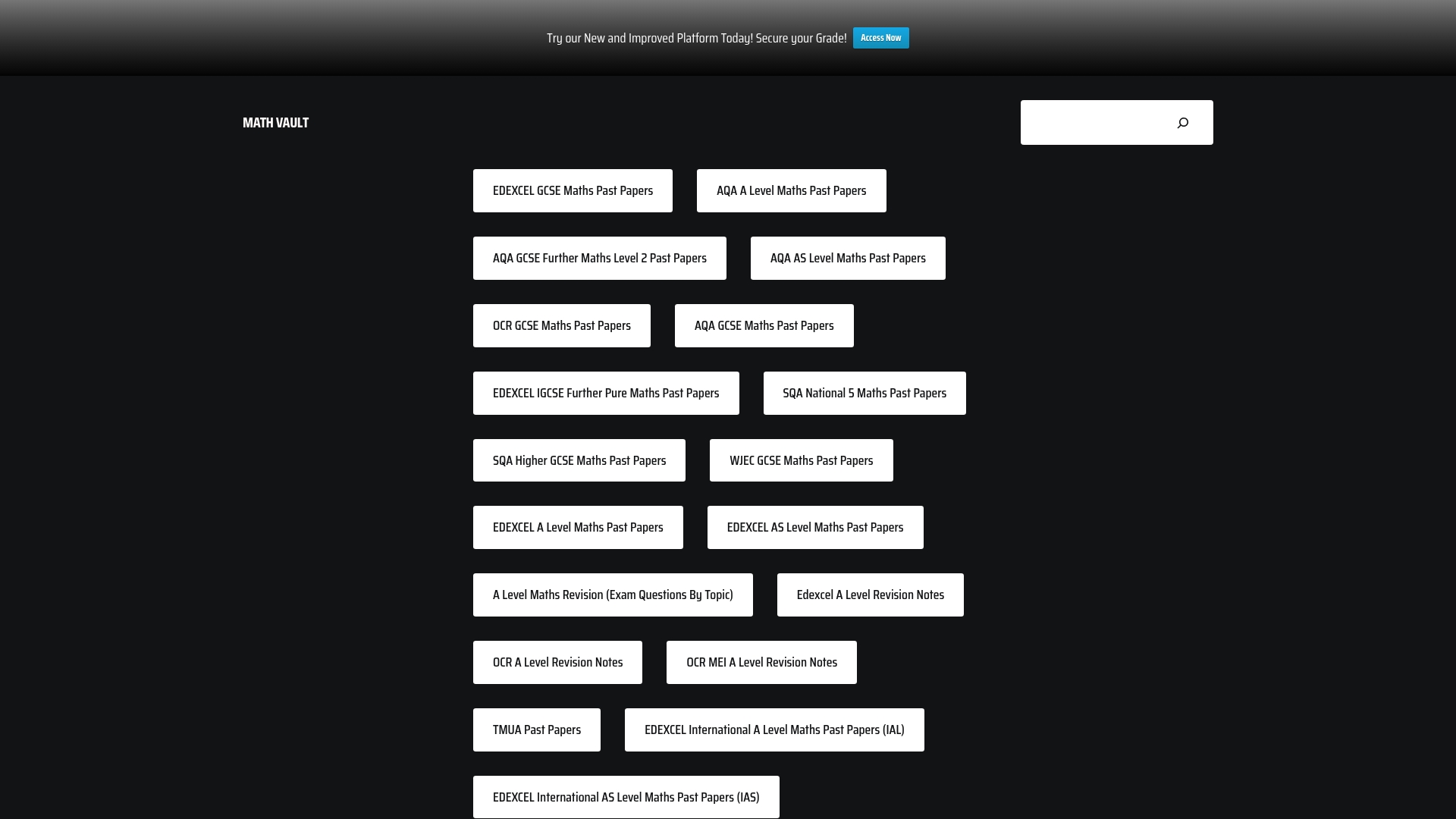
Most revision sites give you either topic-sorted questions or full past papers, rarely both organised for the switch between them. This resource keeps every major UK exam board in one place, so you can move from a focused topic pack straight into a mixed past-paper set without hunting for the right year or board.
- Start with the GCSE maths revision guides hub if you’re not sure where your revision currently sits.
- Use Edexcel GCSE past paper questions by topic once you’ve identified a weak area to drill.
- Move to Edexcel A-Level past paper questions by topic when you’re ready for mixed, exam-style sets at A-Level.
| Stage | Best resource | Practice type |
|---|---|---|
| Diagnosing gaps | GCSE topic packs | Topic practice |
| Building AO1 fluency | A-Level topic packs | Topic practice |
| Final exam preparation | Full past-paper sets | Mixed practice |
Visit the GCSE maths revision guides page to see how topic packs and past papers are organised by board, and select your starting point for this week.
Sources
- Interleaved practice improves mathematics learning (Journal of Educational Psychology summary / ERIC EJ1071568)
- GCSE mathematics: subject content and assessment objectives (Department for Education)
FAQ
What’s the difference between topic practice and mixed practice?
Topic practice means working through questions on a single subject in a row, which builds fluency in one method at a time. Mixed, or interleaved, practice shuffles questions from several topics into one session, which trains you to recognise which method a question needs.
When should I switch from topic to mixed practice?
Switch once you can complete topic questions with few basic errors and can explain the method aloud, or once you’re within four to six weeks of your exam. The GCSE assessment objectives expect you to connect topics, which mixed practice specifically trains.
Does mixed practice actually improve exam results?
Evidence from a controlled study found interleaved practice produced a larger benefit on a delayed test than on an immediate one, with effect sizes of 0.42 and 0.79 respectively, as reported in this interleaving study. That delayed benefit matters because GCSE and A-Level exams are sat months after topics are first taught.
How many topics should I mix in one revision session?
Limit a mixed session to three to five topics so the practice stays productive rather than overwhelming. Pulling in too many topics at once tends to prevent the useful struggle that makes mixed practice effective.
Does MathVault offer both topic and mixed practice resources?
Yes, MathVault organises content by topic for focused revision packs and by full past-paper sets for mixed, exam-style practice, covering GCSE and A-Level across the main UK exam boards. Start with a topic pack and move to a mixed past-paper set once your fluency is secure.
Leave a Reply